FREE HOME DELIVERY ON ORDERS OVER £30 • SAME DAY SHIPPING WHEN YOU ORDER BY 12PM
FREE HOME DELIVERY ON ORDERS OVER £30
SAME DAY SHIPPING WHEN YOU ORDER BY 12PM
FREE HOME DELIVERY ON ORDERS OVER £30 • SAME DAY SHIPPING WHEN YOU ORDER BY 12PM
FREE HOME DELIVERY ON ORDERS OVER £30
SAME DAY SHIPPING WHEN YOU ORDER BY 12PM

Bellavista is a blend of coffees from multiple small producers in the Bellavista region, working with Falcon Coffees, who we bought this coffee from. The producers typically farm just 1–2 hectares each, and the coffees are brought together to create a clean, easy-drinking cup.
We find notes of green pear, raisin and orange, with softer flavours of pistachio and milk chocolate. It’s a balanced, sweet and approachable coffee that we particularly enjoy brewing as a filter.
Body
Acidity
Tasting notes
Roast level
For consistent results, we recommend brewing with measured inputs rather than estimating by eye. Always use a digital scale to weigh both your coffee dose and water. As a baseline, use a brew ratio of 60–70g of coffee per litre (1000g) of water. This range can be adjusted depending on the brewing method, water composition, and the specific coffee you’re working with. Control your variables, make small adjustments, and use taste to guide your final recipe.
Consistency in espresso comes from working within the parameters of your equipment. Use the dose recommended for your basket (usually marked on the side or provided by the manufacturer) and keep it consistent. As a starting point, aim for a brew ratio of around 1:2 — for example, 18g of coffee yielding 33–35g of espresso in the cup. Target an extraction time of 22–30 seconds, with a brew water temperature between 93–95°C. From there, adjust grind size to control flow and use taste to fine-tune the result.
For method-specific guidance, you can find all of our brew guides here.
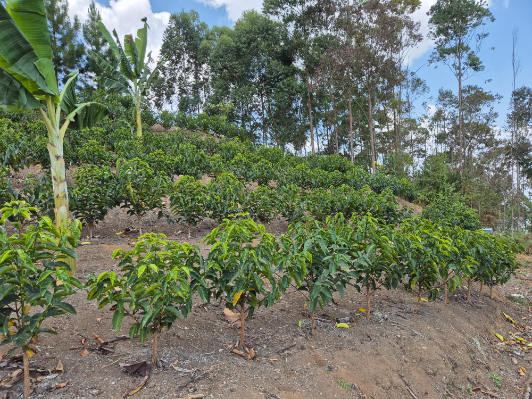
Bellavista is a district with a huge altitude range, but most of the coffee is produced below 1600masl. The coffee in this lot comes from Bellavista, a neighbouring district to Huabal.
This lot is a blend of coffees from individual producers in the region, all of whom own around 1 to 2 hectares of coffee. The varieties in this blend are Marshel, Geisha, and Catuai. After picking, producers place cherries in a tank full of water to remove any floaters, then rest the cherries overnight in plastic bags to homogenize temperature and allow the coffee to rest before placing it on raised beds for 30–40 days. Once dry, producers bring their dry parchment to the Falcon Coffees warehouse in Jaén, where the coffee is cupped and graded and producers are paid on the same day based on the quality they bring.
Falcon Coffees Peru (FCP) was established in 2019 to work directly with farmers in Peru’s northern producing region. FCP was among the first exporters in the region to pay quality-differentiated prices at farm-gate level. In 2022, FCP added exports through producer cooperatives, providing buyers with more reliable access to third-party certified coffees.
FCP now operates two northern warehouses in Jaén and Moyobamba, supported by a team of more than 20 people sourcing and exporting coffee from over 500 farmers and eight cooperatives. The sustainability team delivers farmer training and productivity programmes alongside sourcing activities.
For specialty sourcing, FCP identifies interested farmers, conducts digitally captured on-farm baseline surveys using a Copera-built app, provides training workshops, and offers ongoing agronomy support. FCP commits to purchasing coffee from programme farmers and pays premiums above the local market price according to the quality delivered.
FCP also manages multi-year projects, including Falcon Specialty Plus, delivered with responsAbility, which aims to improve cup quality and increase farmer premiums. The programme has recorded an average score improvement of +1.32 points, with a peak score of 88, and has enrolled 107 producers to date. A separate Soil Health Initiative targets 600 farmers, with the objectives of improving soil health, reducing chemical use, achieving GCP-equivalent certification, and generating farm-level carbon data.
When working with cooperatives, FCP conducts pre-harvest due diligence and cupping calibration, approves samples before delivery and at every approximately 50-bag tranche, directly monitors milling, and analyses and cups processed-lot samples. FCP typically ships coffee within five days of milling. Most cooperatives are located within two hours of the Jaén and Moyobamba offices, enabling rapid troubleshooting and close operational oversight.
Always the best choice. Grind at home for maximum freshness and full control over your coffee.
Our coarsest grind. Ideal for Cafetiere, Chemex, Cold Brew, and Batch Brew.
Works well for cone brewers like V60, and flat-bottom brewers like Kalita or other pour-over brewers.
A finer grind suited to Moka pots, AeroPress, and most domestic espresso machines with pressurised baskets.
Very fine and intended for commercial espresso machines. For best results, grinding fresh is recommended.