FREE HOME DELIVERY ON ORDERS OVER £30 • SAME DAY SHIPPING WHEN YOU ORDER BY 12PM
FREE HOME DELIVERY ON ORDERS OVER £30
SAME DAY SHIPPING WHEN YOU ORDER BY 12PM
FREE HOME DELIVERY ON ORDERS OVER £30 • SAME DAY SHIPPING WHEN YOU ORDER BY 12PM
FREE HOME DELIVERY ON ORDERS OVER £30
SAME DAY SHIPPING WHEN YOU ORDER BY 12PM
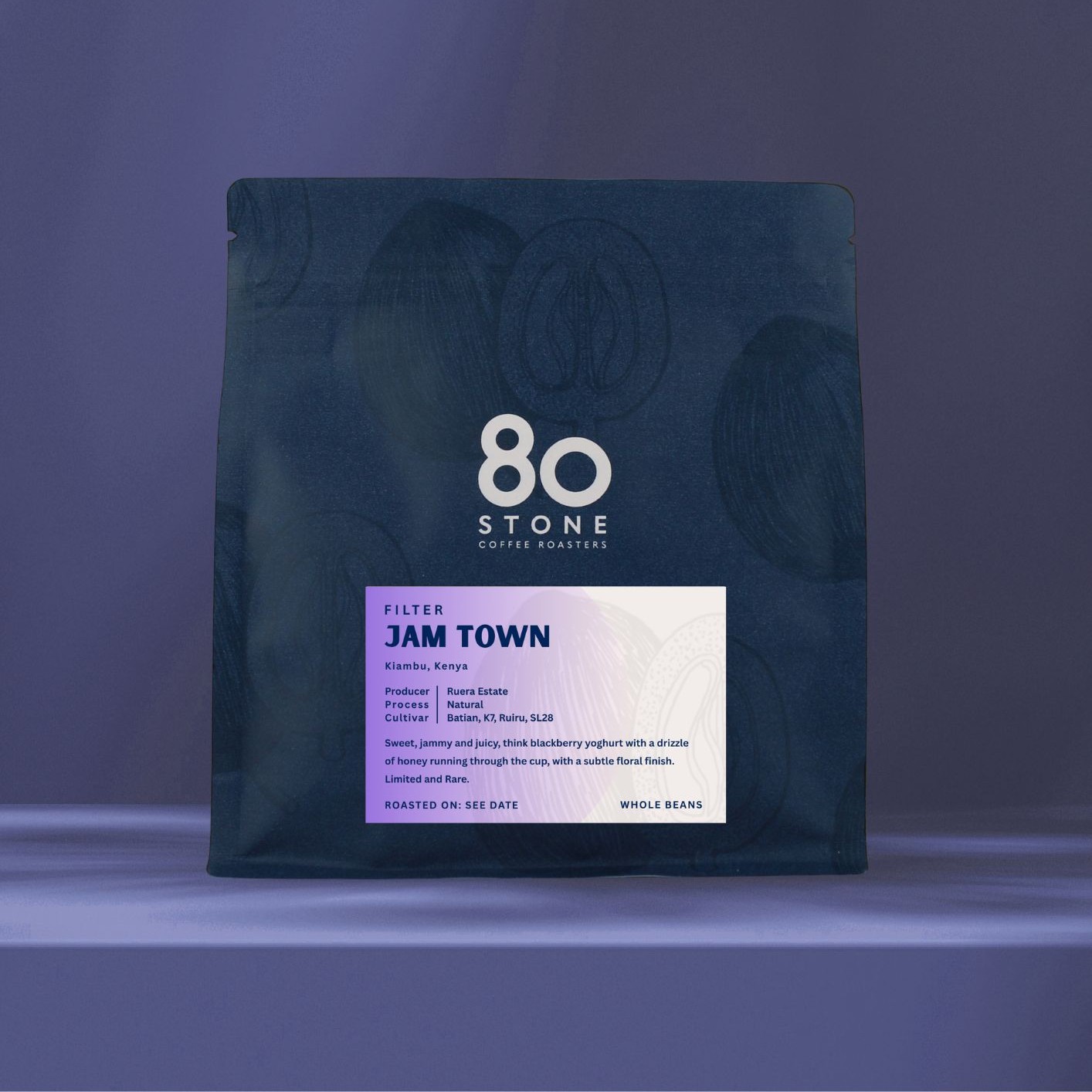
Sweet, jammy and juicy, think blackberry yoghurt with a drizzle of honey running through the cup, with a subtle floral finish. Limited and Rare.
We’ve sourced this beautiful, rare natural Kenyan coffee from DrWakefield, and we’re super excited to have it on the menu. We were blown away when we first tried it, especially as natural-processed Kenyans are still pretty uncommon. We love our washed Kenyans, but it’s fair to say we’re just as big fans of the naturals.
We especially enjoy brewing this as a filter coffee, using methods like the V60 or an immersion brewer. These methods bring out its jammy sweetness and rounded body while keeping the cup clean and easy to enjoy. It’s one of those coffees we could happily drink all day.
Body
Acidity
Tasting notes
Roast level
For consistent results, we recommend brewing with measured inputs rather than estimating by eye. Always use a digital scale to weigh both your coffee dose and water. As a baseline, use a brew ratio of 60–70g of coffee per litre (1000g) of water. This range can be adjusted depending on the brewing method, water composition, and the specific coffee you’re working with. Control your variables, make small adjustments, and use taste to guide your final recipe.
Consistency in espresso comes from working within the parameters of your equipment. Use the dose recommended for your basket (usually marked on the side or provided by the manufacturer) and keep it consistent. As a starting point, aim for a brew ratio of around 1:2 — for example, 18g of coffee yielding 33–35g of espresso in the cup. Target an extraction time of 22–30 seconds, with a brew water temperature between 93–95°C. From there, adjust grind size to control flow and use taste to fine-tune the result.
For method-specific guidance, you can find all of our brew guides here.
blackberry yoghurt • honey • floral
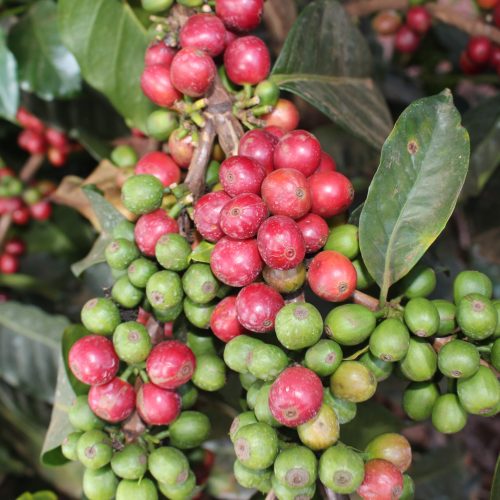
Ruera Estate sits on the edge of one of the most influential places in the history of Kenyan coffee. Nearby Ruiru is home to the research centre where generations of scientists worked to address the challenges facing Kenyan coffee production, and where the Ruiru 11 variety was developed and released. The code “11” denotes that it is the first cultivar developed by Kenyans and that it was released from a one-way cross; in other words, it’s an F1 hybrid. The town’s name became permanently associated with one of the country’s most significant coffee breeding achievements, giving the wider area an important place in Kenya’s coffee story.
The estate covers approximately 190 hectares on the red volcanic soils that have helped make Kiambu County one of Kenya’s best-known coffee-growing regions. Seasonal rainfall and supplementary irrigation support coffee production throughout the year, while the estate remains surrounded by a landscape that has been associated with coffee cultivation for generations.
Ruera is one of the larger estates in the area and provides employment to more than 1,000 people across cultivation, harvesting and processing activities. Its scale makes it an important local employer and a longstanding part of the rural economy.
Like many of Kiambu’s historic estates, Ruera links several chapters of Kenya’s coffee history. It operates in a district that helped shape the country’s reputation for quality coffee, sits alongside institutions that continue to drive research and innovation, and remains part of a farming landscape that has evolved through colonial rule, independence and rapid modernisation. Today, as nearby Nairobi continues to expand and Ruiru grows into one of Kenya’s largest urban centres, estates such as Ruera provide a visible connection between the country’s coffee heritage and its future.
Always the best choice. Grind at home for maximum freshness and full control over your coffee.
Our coarsest grind. Ideal for Cafetiere, Chemex, Cold Brew, and Batch Brew.
Works well for cone brewers like V60, and flat-bottom brewers like Kalita or other pour-over brewers.
A finer grind suited to Moka pots, AeroPress, and most domestic espresso machines with pressurised baskets.
Very fine and intended for commercial espresso machines. For best results, grinding fresh is recommended.