FREE HOME DELIVERY ON ORDERS OVER £30 • SAME DAY SHIPPING WHEN YOU ORDER BY 12PM
FREE HOME DELIVERY ON ORDERS OVER £30
SAME DAY SHIPPING WHEN YOU ORDER BY 12PM
FREE HOME DELIVERY ON ORDERS OVER £30 • SAME DAY SHIPPING WHEN YOU ORDER BY 12PM
FREE HOME DELIVERY ON ORDERS OVER £30
SAME DAY SHIPPING WHEN YOU ORDER BY 12PM
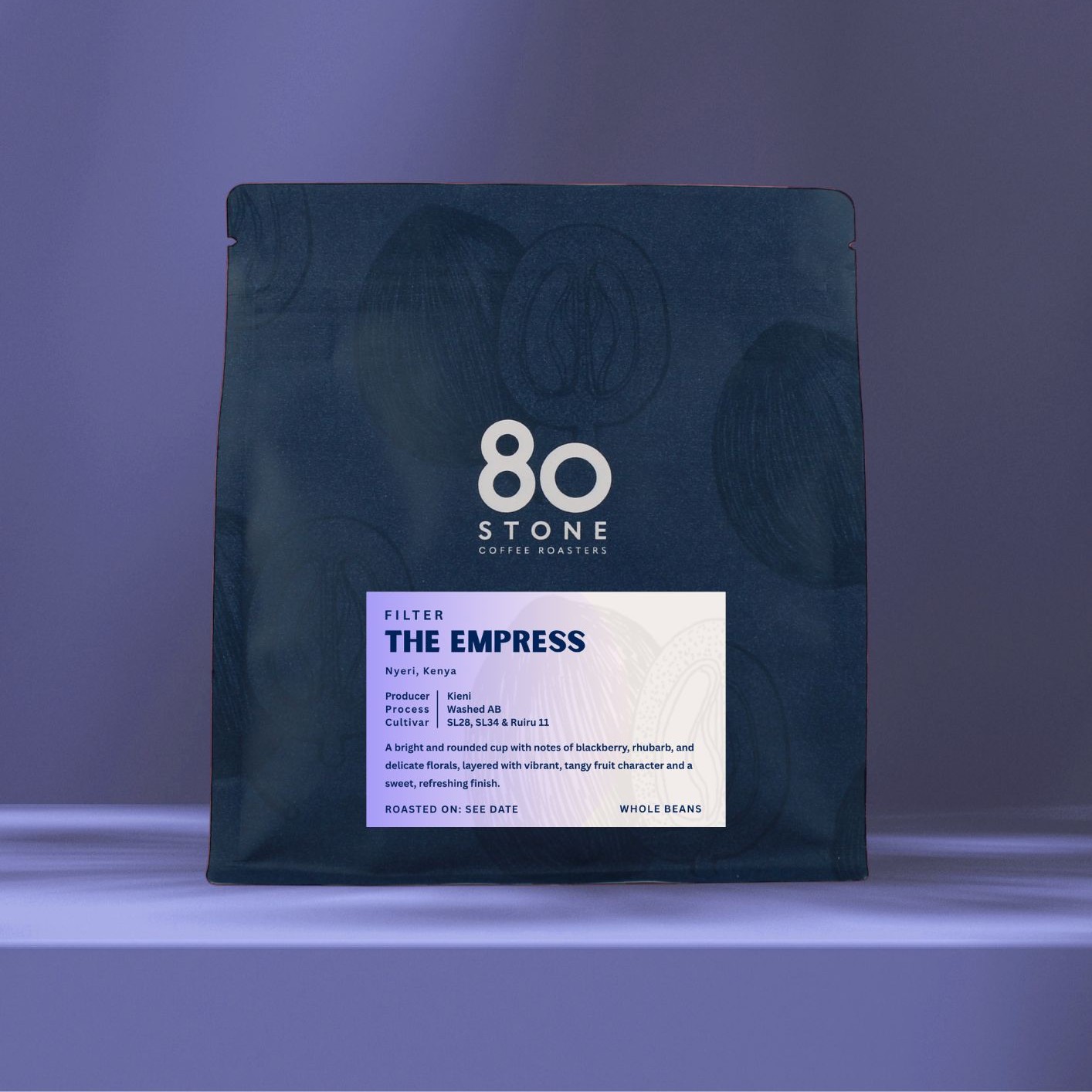
We’ve sourced this beautiful Kenyan coffee from Falcon Coffee, and we’re super excited to have it on the menu. We find this one a little more rounded and sweeter than your typical Kenyan, with plenty of juicy fruit character and a lovely balance that keeps us coming back for another cup.
We especially enjoy brewing this as a filter coffee, using methods like the V60 or an immersion brewer. These methods really bring out the coffee’s juicy acidity, delicate sweetness and rounded body, while keeping the cup bright, clean and incredibly easy to enjoy. It’s one of those coffees we can happily drink all day.
Body
Acidity
Tasting notes
Roast level
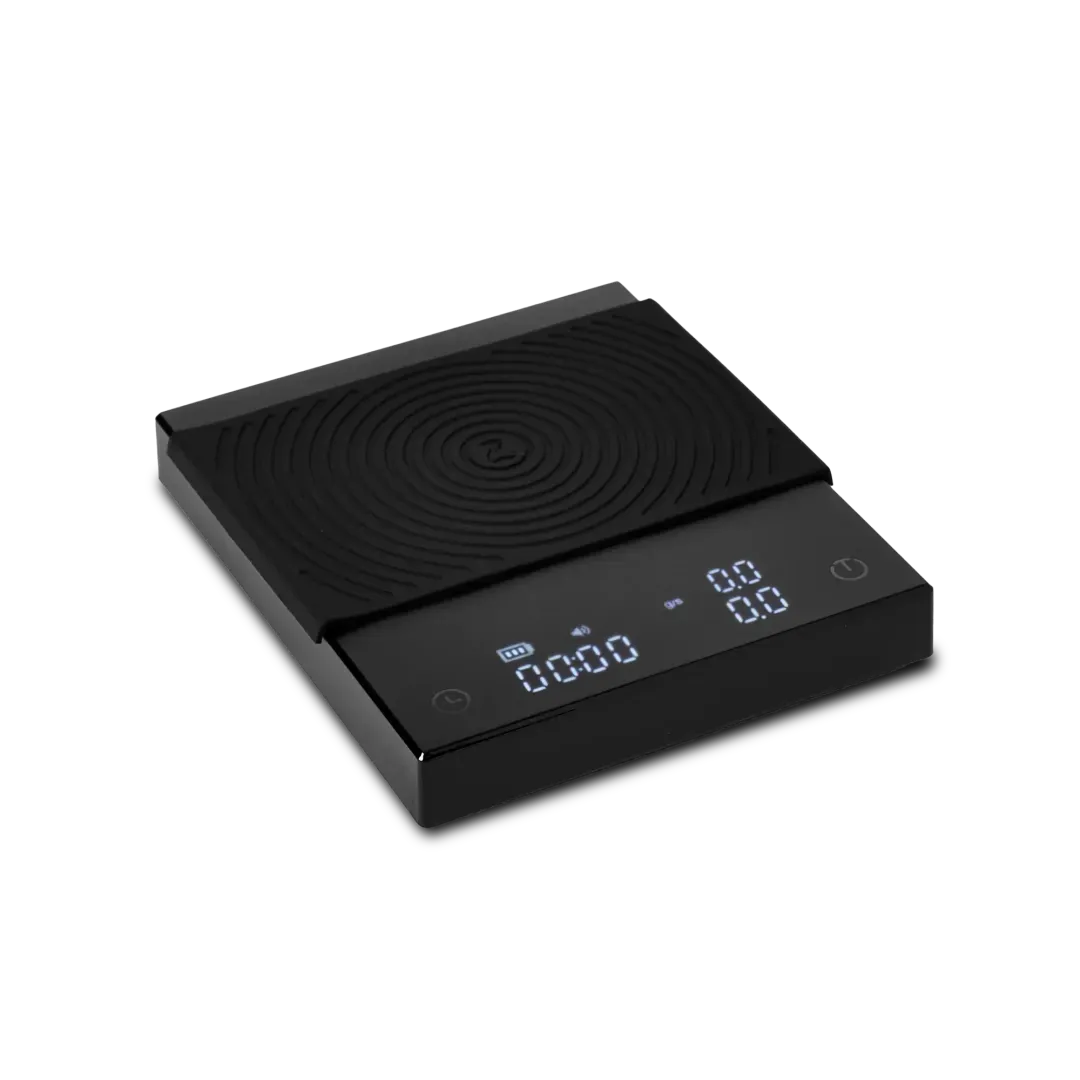
For consistent results, we recommend brewing with measured inputs rather than estimating by eye. Always use a digital scale to weigh both your coffee dose and water. As a baseline, use a brew ratio of 60–70g of coffee per litre (1000g) of water. This range can be adjusted depending on the brewing method, water composition, and the specific coffee you’re working with. Control your variables, make small adjustments, and use taste to guide your final recipe.
Consistency in espresso comes from working within the parameters of your equipment. Use the dose recommended for your basket (usually marked on the side or provided by the manufacturer) and keep it consistent. As a starting point, aim for a brew ratio of around 1:2 — for example, 18g of coffee yielding 33–35g of espresso in the cup. Target an extraction time of 22–30 seconds, with a brew water temperature between 93–95°C. From there, adjust grind size to control flow and use taste to fine-tune the result.
For method-specific guidance, you can find all of our brew guides here.
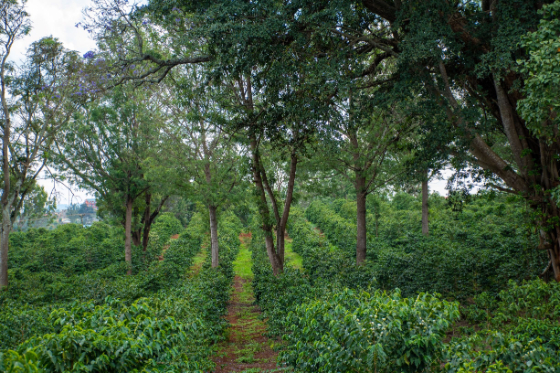
The Kieni wet mill is situated in Nyeri, in Kenya’s central highlands, at an elevation of 1,700 metres above sea level. It is operated by the Mugaga Farmers’ Cooperative Society.
Nyeri County is characterised by cool temperatures and fertile red volcanic soils typical of the central highlands, commonly known as nitisols. The region lies between the eastern foothills of the Aberdare mountain range, part of the eastern edge of the Great Rift Valley, and the western slopes of Mount Kenya. Nyeri town also serves as a gateway for visitors travelling to Aberdare National Park and Mount Kenya.
Coffee produced in Nyeri generally develops and matures slowly, which contributes to the formation of dense, hard beans. This quality is reflected in the cup through pronounced acidity and a rich, syrup-like mouthfeel. For this reason, Nyeri has long been recognised as one of Kenya’s most important coffee-producing regions.
Coffee is cultivated mainly on the slopes and upper plateau, where most farming families live. The land is divided into small family plots, with each household managing its own coffee trees.
The mill has introduced an electronic weighing system that records the weight of cherry deliveries and provides each farmer with a printed receipt. The receipt also shows a cumulative total of the coffee delivered over time.
Kieni is one of several mills owned by the Mugaga Farmers’ Cooperative and currently serves approximately 1,000 members, although membership numbers and delivery volumes may vary, as not all members deliver cherry to Kieni at all times.
This coffee is fully washed. After delivery to the wet mill, the cherries are pulped to remove the outer skin and fruit. Wastewater from this stage is directed into soaking pits for recirculation, supporting water conservation. Pulping is carried out using a disc pulper with three sets of discs that separate the skin and fruit from the parchment-covered bean. The coffee is then fermented overnight to break down residual sugars, after which it is washed, soaked, and spread on raised drying beds. Drying typically takes between 7 and 15 days, depending on climatic conditions and ambient temperature, until the moisture content reaches 10 to 12 percent. In some cases, drying may extend over two to three weeks under slower conditions. The coffee is then transferred to the dry mill and stored in parchment in traditional warehouses known as bodegas until it is ready for dry milling and export.
Always the best choice. Grind at home for maximum freshness and full control over your coffee.
Our coarsest grind. Ideal for Cafetiere, Chemex, Cold Brew, and Batch Brew.
Works well for cone brewers like V60, and flat-bottom brewers like Kalita or other pour-over brewers.
A finer grind suited to Moka pots, AeroPress, and most domestic espresso machines with pressurised baskets.
Very fine and intended for commercial espresso machines. For best results, grinding fresh is recommended.