FREE HOME DELIVERY ON ORDERS OVER £30 • SAME DAY SHIPPING WHEN YOU ORDER BY 12PM
FREE HOME DELIVERY ON ORDERS OVER £30
SAME DAY SHIPPING WHEN YOU ORDER BY 12PM
FREE HOME DELIVERY ON ORDERS OVER £30 • SAME DAY SHIPPING WHEN YOU ORDER BY 12PM
FREE HOME DELIVERY ON ORDERS OVER £30
SAME DAY SHIPPING WHEN YOU ORDER BY 12PM
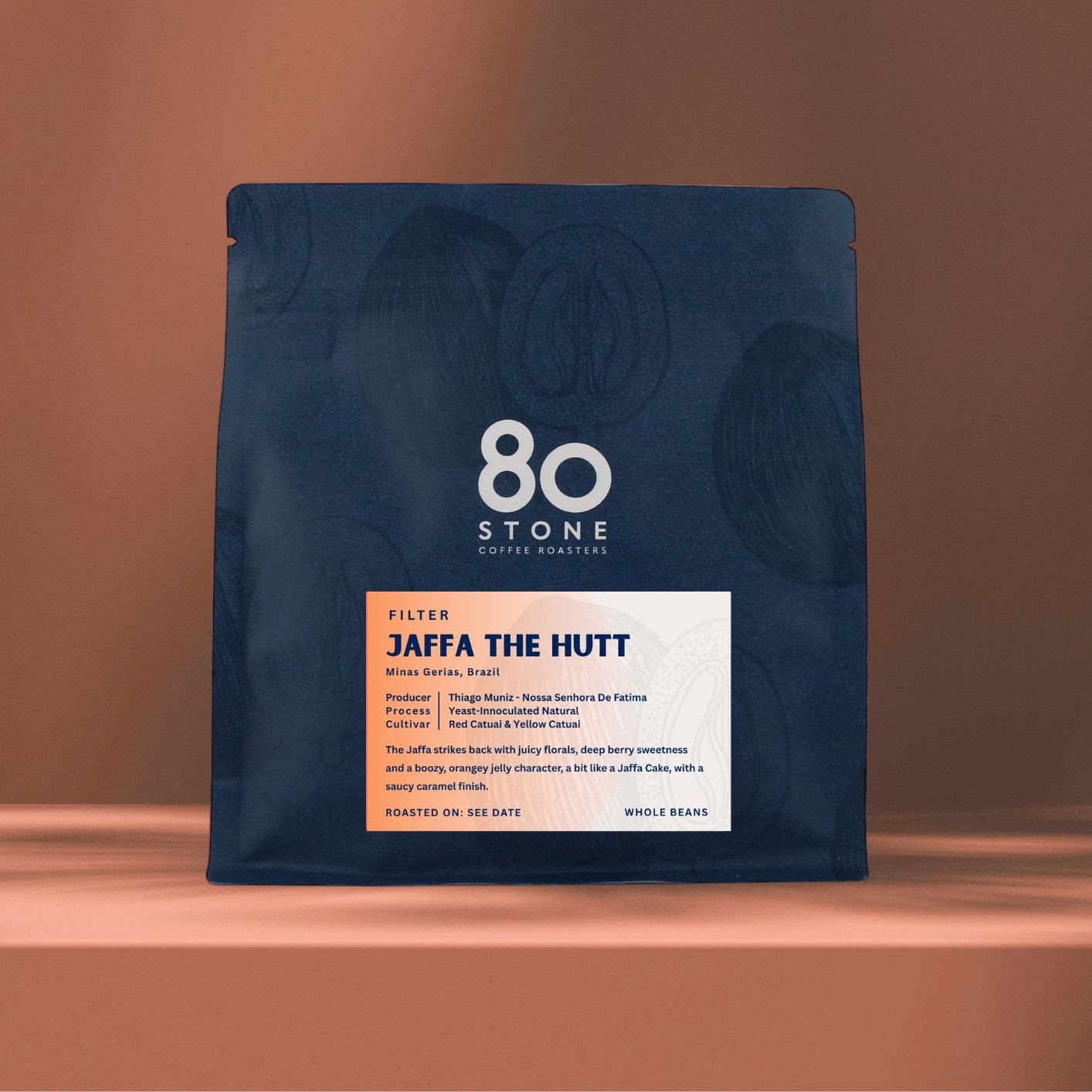
While Brazil is best known for more traditional coffee profiles, this coffee undergoes a more experimental process. The ripe cherries are carefully sorted before being placed in large tanks for 120 hours of fermentation. Selected yeast cultures are introduced to guide fermentation with greater consistency and control, while the cherries remain intact.
After fermentation, the whole cherries are transferred to patios to dry. They are regularly turned to ensure even drying until the ideal moisture level is reached. Once dry, the coffee is sorted before being prepared for export.
We’ve been enjoying this as a filter coffee, with its rounded chocolate sweetness balanced by a orangey jelly-like sweetness and a boozy note that comes through with each sip.
Body
Acidity
Tasting notes
Roast level
For consistent results, we recommend brewing with measured inputs rather than estimating by eye. Always use a digital scale to weigh both your coffee dose and water. As a baseline, use a brew ratio of 60–70g of coffee per litre (1000g) of water. This range can be adjusted depending on the brewing method, water composition, and the specific coffee you’re working with. Control your variables, make small adjustments, and use taste to guide your final recipe.
Consistency in espresso comes from working within the parameters of your equipment. Use the dose recommended for your basket (usually marked on the side or provided by the manufacturer) and keep it consistent. As a starting point, aim for a brew ratio of around 1:2 — for example, 18g of coffee yielding 33–35g of espresso in the cup. Target an extraction time of 22–30 seconds, with a brew water temperature between 93–95°C. From there, adjust grind size to control flow and use taste to fine-tune the result.
For method-specific guidance, you can find all of our brew guides here.
orange • caramel • floral
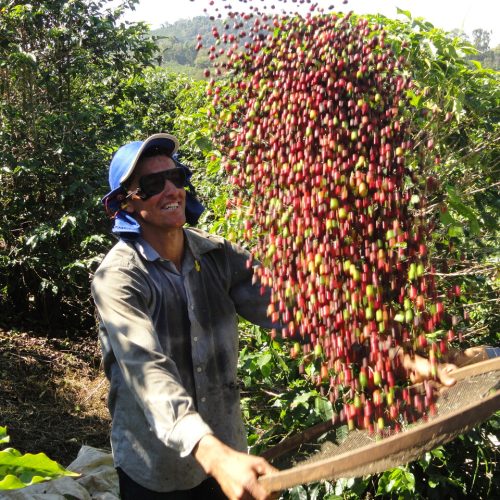
Fazenda Nossa Senhora de Fátima has been in the Muniz family since 1942, situated in the mountainous region of Minas Gerais at 950–1,150 metres. The farm’s elevation and local microclimate provide favourable conditions for growing Arabica coffee.
Coffee is harvested by hand, with a focus on selecting ripe cherries. The farm grows a range of varieties including Mundo Novo, Catuaí, Catucai, Rubi, Icatu and Bourbon Amarelo, with different processing methods used to bring out the character of each lot.
For this lot, the cherries undergo a 120-hour fermentation in large tanks, inoculated with Lalcafe Ouro, a selected strain of Saccharomyces cerevisiae. After fermentation, the cherries are transferred to the patio to dry, before being carefully sorted and prepared for export.
The Muniz family’s work extends beyond coffee production, with a strong focus on preserving the farm’s natural environment. Spring restoration, forest protection and wastewater treatment form part of this approach, with 21 natural springs restored and more than 30% of the farm covered by biodiverse forest.
Always the best choice. Grind at home for maximum freshness and full control over your coffee.
Our coarsest grind. Ideal for Cafetiere, Chemex, Cold Brew, and Batch Brew.
Works well for cone brewers like V60, and flat-bottom brewers like Kalita or other pour-over brewers.
A finer grind suited to Moka pots, AeroPress, and most domestic espresso machines with pressurised baskets.
Very fine and intended for commercial espresso machines. For best results, grinding fresh is recommended.